The Goal
No person living with a severe and persistent mental illness, such as schizophrenia and bipolar disorder, should be left untreated, unhoused, unsupported, or excluded from their community. For people living with severe mental illness, recovery is an ongoing process of managing symptoms and building productive, meaningful, and fulfilling lives. Appropriate treatment, housing, support, and community inclusion are essential.
A Shared Responsibility
Severe mental illness is both a health and a municipal issue because it affects public health, public safety, homelessness, emergency services, community well-being and social inclusion. Municipalities cannot do everything, but what they do matters. Working together with individuals, families, Indigenous communities, governments, health authorities, and community organizations such as the BC Schizophrenia Society, municipalities can make a difference.
The British Columbia Schizophrenia Society (BCSS)—a provincial non-profit organization founded in 1982—advocates for individuals and families affected by schizophrenia and other severe and persistent mental illnesses.
What BCSS is Asking Municipal Leaders to Do
- Recognize severe mental illness as an important municipal concern affecting community well-being.
- Include severe mental illness considerations (impacts on individuals, families and communities) within municipal plans, policies and election platforms.
- Support community partnerships that improve treatment, recovery, and supported housing.
- Promote safe, inclusive, and healthy communities for everyone.
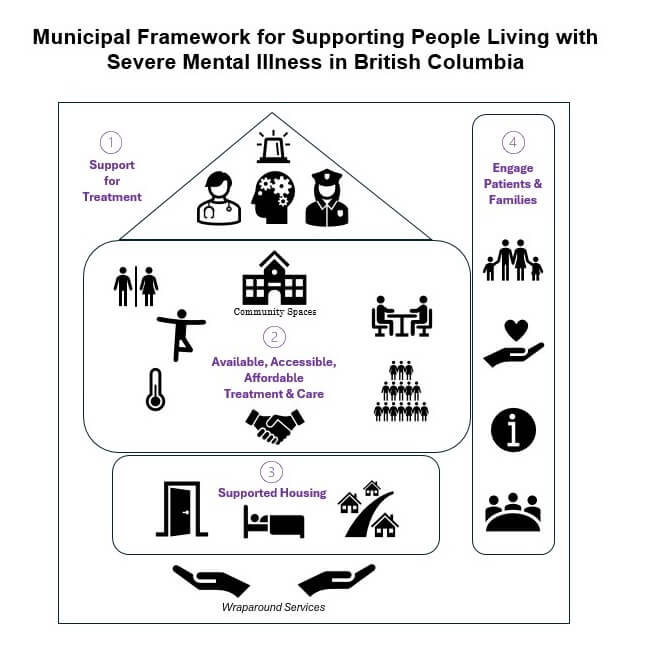
The Four Municipal Priorities
- Support for Treatment – Strengthen collaborative crisis response initiatives, frontline worker education, and early intervention programs that improve outcomes for people living with severe mental illness and their families.
- Available, Accessible, and Affordable Treatment and Care – Encourage municipal planning processes that support community-based mental health services and reduce barriers to accessing care.
- Supported Housing – Champion housing initiatives through municipal leadership, planning, partnerships, and community engagement. Appropriate supported housing is fundamental to recovery and community well-being.
- Engagement of People Living with Severe Mental Illness and Their Families – Ensure that people with lived experience and family caregivers are included in municipal consultations, planning, and community initiatives.
Recovery, Inclusion, and Public Safety
An individual’s journey towards recovery involves more than treatment and housing. Municipalities help create opportunities for belonging through recreation programs, libraries, volunteer opportunities, cultural activities, and community spaces. Early intervention, treatment, and supported housing also contribute to safer and healthier communities while reducing pressures on emergency services, hospitals, and policing resources.
Our Commitment
BCSS is committed to working collaboratively with municipalities across British Columbia. We believe that practical, community-based solutions can improve the lives of individuals and families affected by severe mental illness.
Conclusion
This platform is founded on four principles:
- Treatment
- Recovery – managing symptoms and building fulfilling lives
- Partnership
- Practical municipal action
Together, we can build communities where people living with severe mental illness and their family members are treated with dignity, feel supported, and welcomed as valued members of society.