Researchers at the University of Calgary, in partnership with Interior Health, are inviting clients and family/informal caregivers with experience of mental health discharge from an acute care facility to home to take part in a research study.
Study Summary
The study aims to identify and prioritize what is most important during discharge planning for individuals living with severe and persistent mental illness. We want to understand the perspectives of clients, family/informal caregivers, and healthcare providers, including where their priorities align and differ.
The study uses the Nominal Group Technique (NGT), which involves a structured 90-minute virtual group discussion followed by an individual ranking of the priorities identified by the group. We are aiming for 4–8 participants in each group.
Eligibility
Client participants must be 18 or older and have experienced hospitalization related to a severe and persistent mental illness within the past two years.
Caregivers may be family members, friends, or other significant individuals who provided regular, unpaid support to someone following a mental health hospitalization. Participants must be able to provide informed consent and participate in the virtual group discussion in English.
Recruitment is primarily focused across British Columbia, although eligible individuals in Alberta may also be able to participate. Because the sessions are virtual, we want to reach clients and caregivers from a range of communities rather than target a specific geographic distribution.
What to Expect
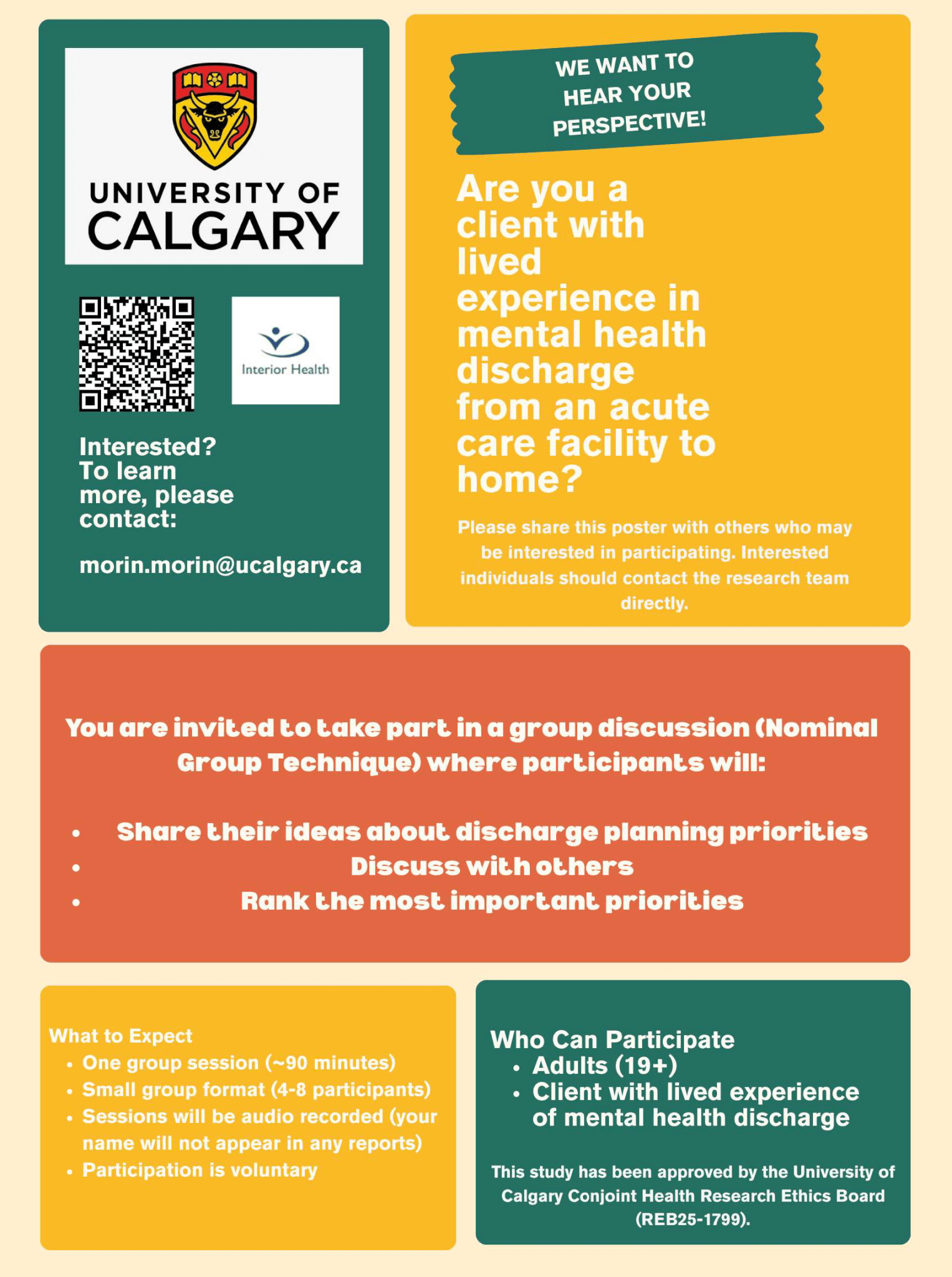
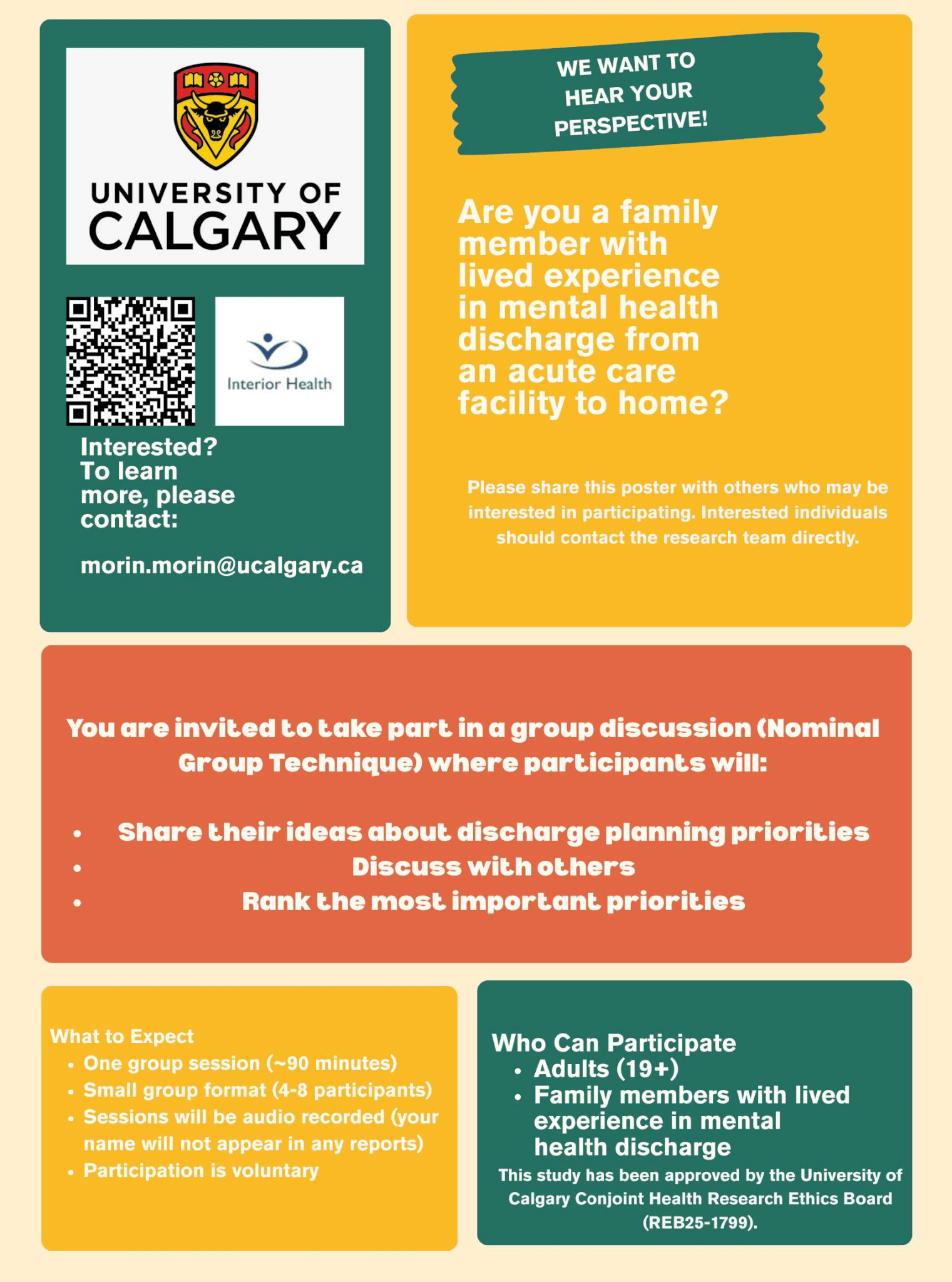
- One structured, virtual group discussion of about 90 minutes, using a method called the Nominal Group Technique
- A small group of 4 to 8 participants
- A chance to share ideas about discharge planning priorities, discuss them with others, and then individually rank the priorities the group identifies
- Audio recording of sessions, with no names in any reports
- Voluntary participation
Contact
To learn more, please contact the research team at morin.morin@ucalgary.ca. Please share this post with anyone who may be interested.
This study has been approved by the University of Calgary Conjoint Health Research Ethics Board (REB25-1799).