Research update from Dr. Todd Woodward and UBC Team
Schizophrenia and related psychotic disorders affect up to 3% of people in Canada. These conditions often begin early in life and may affect thinking, daily functioning, and relationships, often with wide-reaching impacts for individuals and their families. Recovery is an ongoing process that requires support, understanding, and access to effective treatment. While stigma and isolation remain obstacles, growing awareness and advances in research are helping to improve care and strengthen hope along the way.
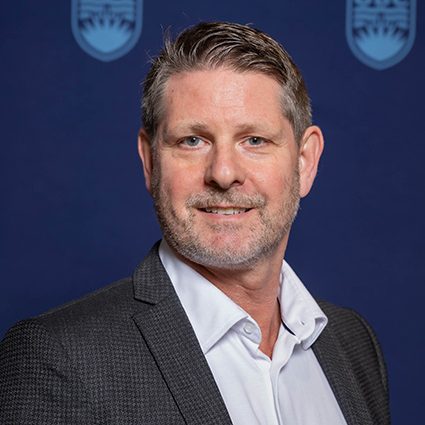
Some of that progress is being driven by Dr. Todd Woodward and his research teams at the University of British Columbia. Dr. Woodward is a cognitive neuroscientist who has devoted his career to uncovering how patterns of thinking and brain activity relate to the symptoms of schizophrenia. At UBC, he leads two research labs — the Brain Dynamics Lab and the Cognitive Neuroscience of Schizophrenia (CNoS) Lab — both dedicated to improving understanding, diagnosis, and treatment for people living with schizophrenia and psychosis.
Helping People Today and Shaping Treatments for Tomorrow
Dr. Woodward’s research team offers free, research-supported group therapies for people living with psychosis in Vancouver, in collaboration with Vancouver Coastal Health’s outpatient mental health teams. These therapies focus on two non-medication approaches known as Metacognitive Training (MCT) and Cognitive Remediation (CR). Both are forms of cognitive-behavioural therapy (CBT) that help individuals strengthen thinking skills, improve insight, and better understand how thoughts and beliefs influence perception during psychosis.
About meta-cognitive training, Dr. Woodward says: “Delusions are beliefs that are difficult to give up, and we’ve found that people can learn skills to better evaluate and integrate evidence. By teaching people the thought processes that we all actually share—but that become exaggerated in schizophrenia—we [are] able to actually relieve symptoms.”
Studies around the world show that MCT and CR can reduce some symptoms, enhance daily functioning, and strengthen brain networks involved in thinking and awareness. Dr. Woodward’s team is helping to extend this work in B.C. — offering direct support to participants while learning more about how these therapies lead to measurable changes in the brain.
Understanding How the Brain Thinks
Dr. Woodward’s research uses advanced brain imaging tools such as functional MRI (fMRI) — a technique that measures tiny changes in blood flow across different regions of the brain while a person performs mental tasks. By looking at when and where the brain “lights up,” researchers can see how brain systems communicate during reasoning, memory, or decision-making.
By connecting patterns observed in the brain with the experiences of thought, emotion, and perception, this research helps bridge the gap between biology and psychology — offering new clues for early diagnosis and more personalized, effective treatments for mental illness.
About fMRI in schizophrenia, Dr. Woodward says: “[Over] 20 years of work, we’re now have an excellent understanding of how fMRI configures into reliable patterns when certain thinking modes take place. The lab is now focused on determining how dysfunction in these thinking modes results in the symptoms of schizophrenia.”
The Labs: Two Approaches, One Mission
The Cognitive Neuroscience of Schizophrenia (CNoS) Lab explores how disruptions in cognition and brain activity give rise to symptoms such as hallucinations and delusions. By combining clinical interviews, cognitive testing, and brain imaging, the lab works to understand how brain networks shift during psychosis and how they change with effective, research-supported therapies. Current studies explore memory, auditory hallucinations, the formation of delusions, as well as cognitive training, in people with schizophrenia. By looking at how the brain responds to specific tasks, the lab aims to identify biomarkers that can predict treatment response and guide personalized interventions. Ultimately, the CNoS lab aims to translate these insights into more effective treatments and recovery strategies.

The Brain Dynamics Lab focuses on mapping cognitive modes — identifying consistent patterns of brain activity that appear when people engage in specific types of mental work.They have developed methods and software for fMRI data analysis (fMRI-CPCA) which is available, open-sourced, to researchers world-wide.
Using these tools, the Brain Dynamics Lab has identified a set of task‑based cognitive modes, several of which can be detected again and again across many different tasks, study sites, and participant groups. Each mode is linked to a broad cognitive function based on the kinds of tasks and conditions that activate it, such as maintaining attention, integrating evidence, or recalling personal memories. This approach is meaningful because it offers a more stable “map” of how the brain supports thinking. In the context of psychiatric conditions, this makes it possible to ask how these core modes are altered in illness, and how therapies may restore or rebalance them.
Training the Next Generation of Mental Health Researchers
Dr. Woodward’s labs also serve as training grounds for emerging scientists who are passionate about brain research and mental health. His current trainees include:

Ava Momeni: Ava is a second-year PhD student in Neuroscience, whose research seeks to better understand deficits in attentional control. For her PhD project, Ava is leveraging a large-scale movie functional magnetic resonance imaging (fMRI) dataset to investigate the brain-based subtypes of attention-deficit/hyperactivity disorder in children.
Erica Zeng: Erica is a second year Master’s student in Bioinformatics. Her research focuses on applying the team’s fMRI-CPCA method to detect brain networks during tasks in a single subject, with the goal of using this to better understand schizophrenia-related symptoms in individuals.


Solana Redway: Solana is a Master’s student in Neuroscience. Her Master’s research focuses on identifying patterns of brain activation by having subjects engage in tasks while their brains are being imaged using fMRI. In adolescents with Attention-Deficit/Hyperactivity Disorder (ADHD), Solana will investigate how brain activation changes over development, with the goal of better understanding ADHD symptoms.
Amber Lu: Amber is a research assistant in the lab and has recently graduated with a Bachelor’s of Kinesiology. She is interested in researching brain activation underlying pain to better understand how individuals cope with pain in themselves and others.

Together, this dynamic team is helping build a future where people with schizophrenia and related conditions can access more effective, individualized care — and where families can better understand the science of hope behind recovery.
If you would like to support our research efforts focused on schizophrenia and related psychotic disorders, please donate to the BCSS Foundation here.