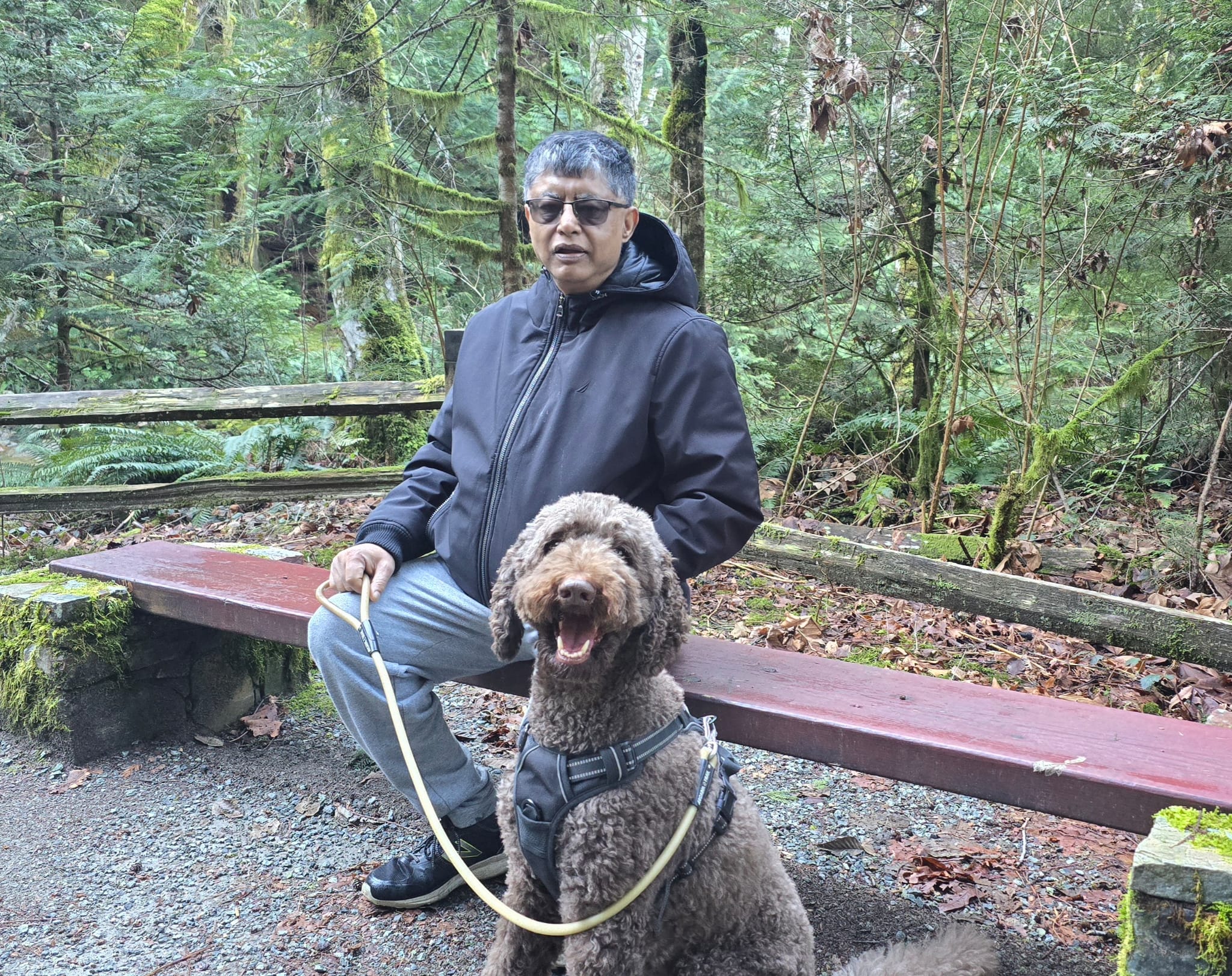
Paul’s Story
My family came to Canada from India in 1967, when I was just two years old. Like many immigrant families, my young parents arrived with high hopes of building a better life in a new and prosperous country.
We settled in Vancouver, with my dad working as a mechanical engineer and my mom working for Vancouver General Hospital. The future seemed bright, full of optimism and dreams of new opportunities.
But life didn’t unfold as expected. My dad struggled to maintain steady employment, often bouncing from job to job. At the time, my family believed this was due to the stigma he faced as an Indian man seeking work in a predominantly white country. This likely played a role, but the deeper issue emerged in 1972, when he was diagnosed with schizophrenia.
Dad’s diagnosis
Back then and even now, a schizophrenia diagnosis can be terrifying. It was the 1970s, and we weren’t far away from the times when people with mental health struggles were treated with barbaric, dehumanizing methods. I vividly remember visiting my father at Riverview Hospital when I was nine years old, clutching my mother’s hand and feeling so scared and overwhelmed.
The following 12 years were incredibly difficult. My dad lacked insight into his illness (anosognosia) and often refused medication. Our home was in turmoil, and I lived in constant fear that others would discover his condition.
In 1985, my dad took his own life. I loved him deeply and think about him every day. He lives in my memory now, and I feel he is always with me. But in the official statistics, he is just another life lost to a complex and challenging mental illness.
My own diagnosis
The first time someone suspected I might have schizophrenia I was 16. My dad took me to his psychiatrist, worried I was developing the same illness he had. The concern was dismissed, though in hindsight, there may have been early signs that could have been recognized with a greater societal understanding of the illness.
It took several years of emotional hardship and countless struggles, as well as numerous visits to psychologists, doctors and mental health professionals, before I received an official diagnosis of schizophrenia in the early 1990s. My interpretation of reality at the time was that people were out to do me harm, and it took being diagnosed twice before I began to accept the illness and begin my journey to recovery.
The recovery process
Early on in my recovery, I tried to “make up for lost time,” pushing myself too hard. I made no allowance for my illness and didn’t give myself a chance to succeed.
Eventually, I realized it would take time to get back on my feet. Even when I was on the road to recovery, some days felt like a setback, and that was OK. Progress meant taking smaller steps and having compassion for myself. I found that the caregivers I worked with offered expert and caring advice. Since I grew up in Canada, I didn’t feel a need for culturally competent care.
I like to use this analogy:
A person facing severe mental health challenges is like a campfire whose coals have burnt down and are covered in ash, but still alive. With care and attention, those coals can reignite. But the fire needs ongoing monitoring and tending to keep burning.
So, all of us with a mental illness need support and assistance from family, friends and professional caregivers.
Today
For me, several factors keep me stable today and keep my light bright. After my father’s experiences, I saw the importance of medication and ongoing psychiatric care. I’ve built my own loving family. I have an incredible wife and two wonderful children. They, along with the rest of my family and friends, are my support network. My roles as a husband, father and son give me purpose and strength.
I work in community support helping people with disabilities live fuller, more independent lives. I’ve earned a Bachelor of Science in management and systems science and an accounting diploma, and I’ve completed extensive coursework focused on counselling, peer support and self-development.
I’ve shared my story widely and even facilitated my own support groups for people experiencing mental health challenges. I love the structure of my work, and I’m proud of my ability to help others.
In a world that can often feel harsh and unforgiving toward people with schizophrenia, I want others to know to be kind and patient with themselves along their journey. Understanding of this illness has improved since my father’s diagnosis in the 1970s, but misconceptions and stigma persist, both within society and the medical field.
Accepting my illness wasn’t easy and recovery still isn’t. It’s an ongoing process that will continue for the rest of my life. But today, I live a rich, complex and beautiful life. I wouldn’t trade it for any other.
The main thing I would like for you to take away from my story is that it is possible to successfully live with schizophrenia.
If my story resonates with you, I’ve written a book about my experiences and strategies to manage schizophrenia called Schizophrenia Solutions. If you, or a loved one are struggling with schizophrenia, it is my sincere desire for the book to help you. Even if you take from it, just one or two suggestions, my aim is for it to assist in your recovery.
Some Strategies for Recovery
Paul’s lived experience has shown him that strategies for living with schizophrenia go a long way to living a full life. These include:
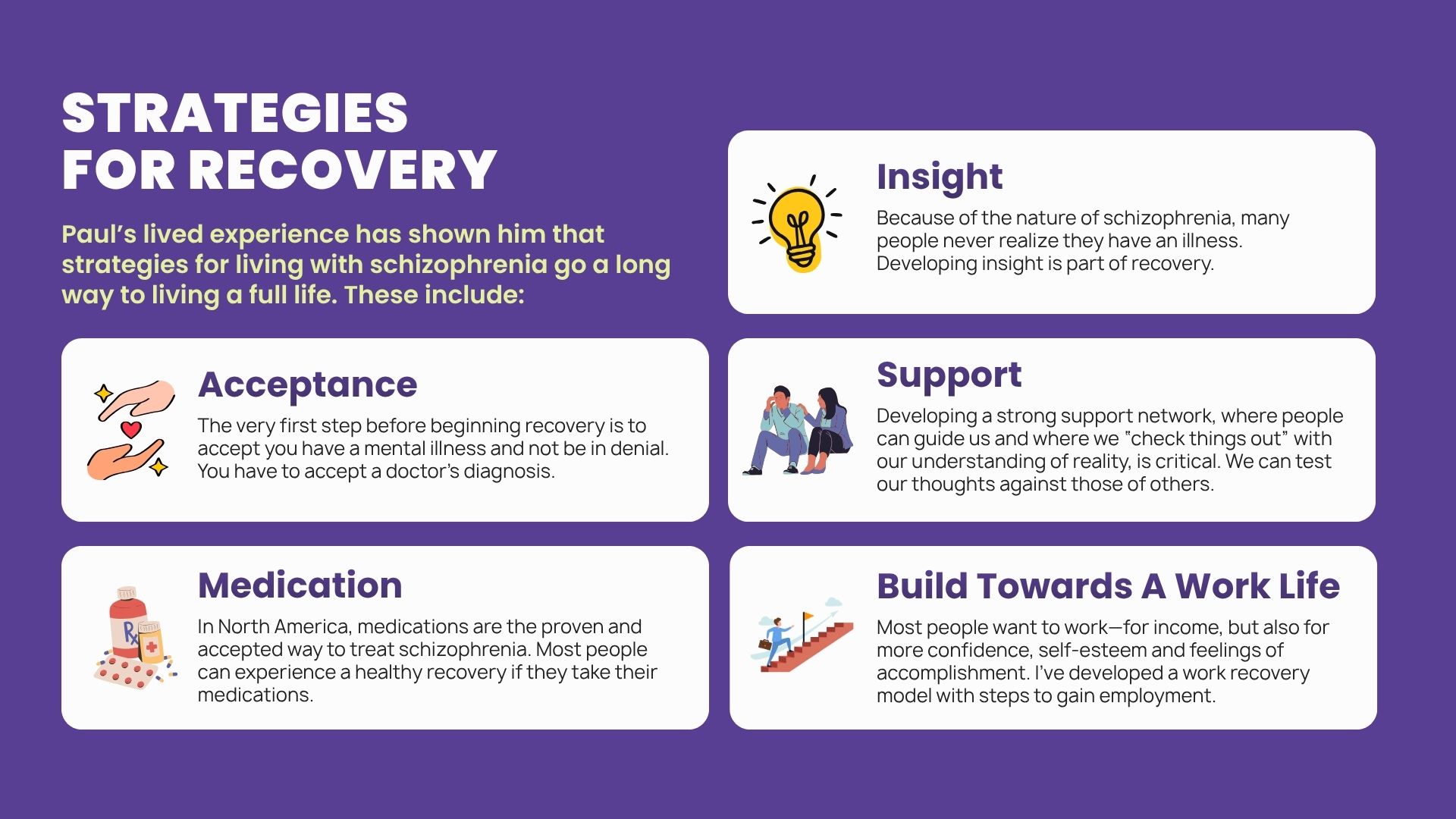
1. Acceptance: The very first step before beginning recovery is to accept you have a mental illness and not be in denial. You have to accept a doctor’s diagnosis.
2. Medication: In North America, medications are the proven and accepted way to treat schizophrenia. Most people can experience a healthy recovery if they take their medications.
3. Insight: Because of the nature of schizophrenia, many people never realize they have an illness. Developing insight is part of recovery.
4. Support: Developing a strong support network, where people can guide us and where we “check things out” with our understanding of reality, is critical. That means we can test our thoughts against those of others.
5. Building towards a work life: Most people want to work—for income, but also for more confidence, self-esteem and feelings of accomplishment. I’ve developed a work recovery model with steps to gain employment. Jump over steps that don’t work for you, and stop where you feel comfortable:
diagnosis → unpaid volunteer work → paid volunteer work → part-time work → four days per week → full-time work or self-employment → fully recovered
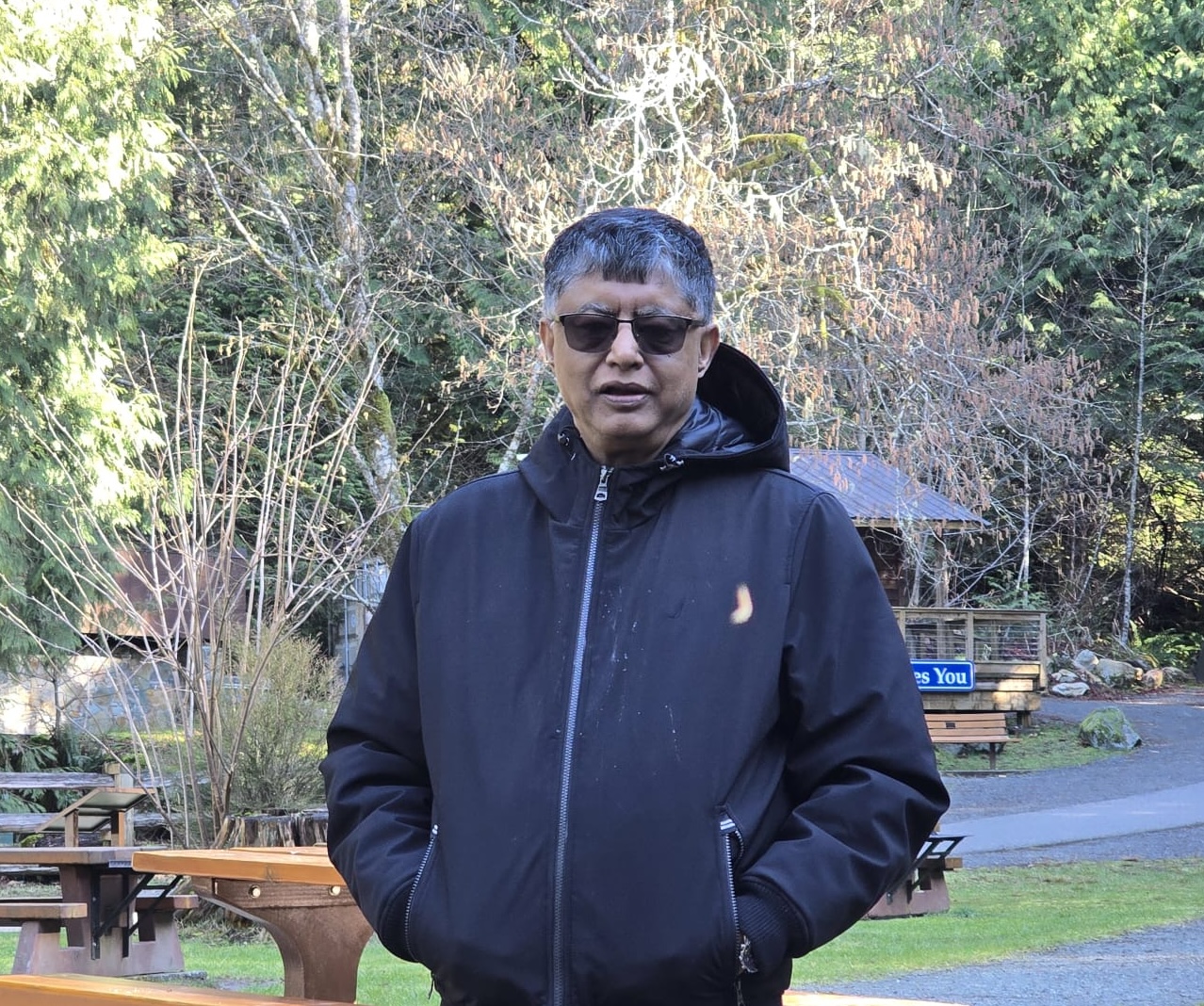
Paul holds a Bachelor of Science in management and systems science from SFU. He completed the Canadian Securities Course and has become an active investor in the equity markets. A Certified Mental Health Worker, he also holds a diploma in accounting. Paul’s been a community inclusion worker for the past seven years. He has also been on the Board of Directors of the BC Schizophrenia Society for most of the past 20 years.